social media
1 resultado encontrado
informe de investigación
Financial Education in Digital Environments: the Pedagogical Potential of Social Media.
Autoría: Aguirre, Agustina Mercedes; Dutra, Gabriela Daiana; Lillo Ramirez, Sarita Ailén …
Año: 2025
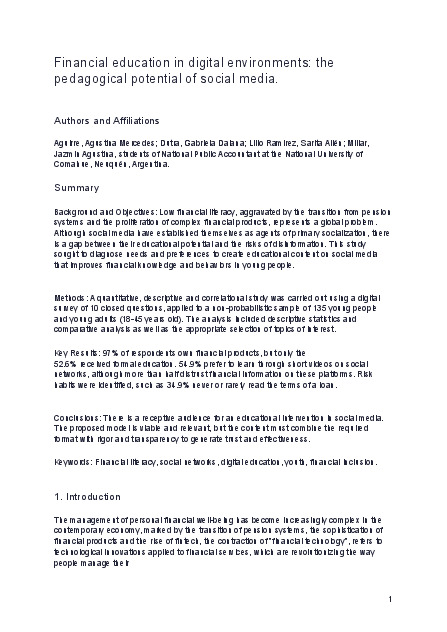
Low financial literacy, aggravated by the transition from pension systems and the proliferation of complex financial products, represents a global problem. Although social media have established themselves as agents of primary socialization, there is a gap between their educational potential and the risks of disinformation. This study sought to diagnose needs and preferences to create educational content on social media that improves financial knowledge and behaviors in young people.
Leer más...Position: 574 (22 views)